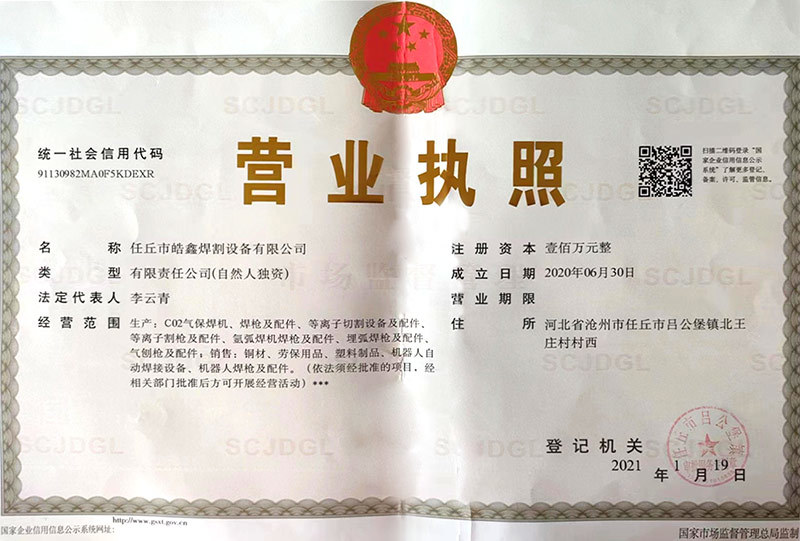
Hao Xin welding and cutting equipment




Enhancing Welding Precision: Tips for Consistent Torch Control
Release time:
2024-06-02
**Introduction** Welding is a critical process in the automotive industry, particularly when it comes to repair and maintenance. Achieving precise and consistent torch control is essential for producing high-quality welds and ensuring the safety and durability of the finished product. In this article, we will explore some expert tips and techniques for enhancing welding precision and achieving con

**Introduction**
Welding is a critical process in the automotive industry, particularly when it comes to repair and maintenance. Achieving precise and consistent torch control is essential for producing high-quality welds and ensuring the safety and durability of the finished product. In this article, we will explore some expert tips and techniques for enhancing welding precision and achieving consistent torch control in your automotive repair and maintenance work.
**1. Understanding the Importance of Torch Control**
Achieving consistent torch control is crucial for producing clean, strong welds that meet industry standards. Proper torch control helps prevent defects such as undercutting, distortion, and incomplete fusion, which can compromise the integrity of the weld joint. By mastering torch control techniques, you can improve the quality and durability of your welds, leading to safer and more reliable automotive repairs.
**2. Selecting the Right Welding Equipment**
To achieve precise torch control, it is essential to use the right welding equipment. Select a welding machine that offers adjustable settings for current, voltage, and wire speed, allowing you to fine-tune your welding parameters for optimal control. Additionally, invest in a high-quality welding torch with ergonomic design features, such as a comfortable grip and adjustable angle, to enhance your precision and stability during welding.
**3. Practicing Proper Torch Positioning**
Proper torch positioning is key to achieving consistent weld quality and minimizing defects. Maintain a steady hand and a stable posture while welding, keeping the torch at the correct angle and distance from the workpiece. Practice maintaining a consistent travel speed and torch movement pattern to produce uniform weld beads and ensure full penetration of the joint.
**4. Adjusting Welding Parameters**
Fine-tuning your welding parameters is essential for achieving precise torch control and consistent weld quality. Experiment with different settings for current, voltage, wire speed, and gas flow rate to find the optimal combination for the specific welding task at hand. Keep detailed records of your welding parameters and make adjustments as needed to improve your weld quality and control.
**5. Mastering Torch Technique**
Developing proper torch technique is critical for enhancing welding precision and achieving consistent torch control. Practice fundamental welding movements, such as weaving, whip, and circle motions, to produce smooth and even weld beads. Focus on maintaining a steady hand and a consistent travel speed to control the heat input and fusion of the weld joint.
**6. Implementing Quality Assurance Measures**
To ensure consistent torch control and high-quality welds, implement quality assurance measures in your welding process. Perform regular inspections of your welding equipment, including the torch, cables, and gas supply, to detect any wear or damage that could affect your torch control. Conduct visual inspections of your welds to identify defects or imperfections that require immediate attention.
**7. Seeking Professional Training and Certification**
For automotive technicians and welders looking to enhance their welding precision and torch control skills, seeking professional training and certification can be beneficial. Enroll in welding courses and workshops to improve your technique and knowledge of industry best practices. Obtain welding certifications to demonstrate your expertise and commitment to producing high-quality welds in automotive repair and maintenance.
**Conclusion**
Enhancing welding precision and achieving consistent torch control is essential for producing high-quality welds in automotive repair and maintenance. By understanding the importance of torch control, selecting the right welding equipment, practicing proper torch positioning, adjusting welding parameters, mastering torch technique, implementing quality assurance measures, and seeking professional training and certification, you can improve your welding skills and produce reliable welds that meet industry standards. Follow these expert tips and techniques to elevate your welding performance and ensure the safety and durability of your automotive repairs.
Welding is a critical process in the automotive industry, particularly when it comes to repair and maintenance. Achieving precise and consistent torch control is essential for producing high-quality welds and ensuring the safety and durability of the finished product. In this article, we will explore some expert tips and techniques for enhancing welding precision and achieving consistent torch control in your automotive repair and maintenance work.
**1. Understanding the Importance of Torch Control**
Achieving consistent torch control is crucial for producing clean, strong welds that meet industry standards. Proper torch control helps prevent defects such as undercutting, distortion, and incomplete fusion, which can compromise the integrity of the weld joint. By mastering torch control techniques, you can improve the quality and durability of your welds, leading to safer and more reliable automotive repairs.
**2. Selecting the Right Welding Equipment**
To achieve precise torch control, it is essential to use the right welding equipment. Select a welding machine that offers adjustable settings for current, voltage, and wire speed, allowing you to fine-tune your welding parameters for optimal control. Additionally, invest in a high-quality welding torch with ergonomic design features, such as a comfortable grip and adjustable angle, to enhance your precision and stability during welding.
**3. Practicing Proper Torch Positioning**
Proper torch positioning is key to achieving consistent weld quality and minimizing defects. Maintain a steady hand and a stable posture while welding, keeping the torch at the correct angle and distance from the workpiece. Practice maintaining a consistent travel speed and torch movement pattern to produce uniform weld beads and ensure full penetration of the joint.
**4. Adjusting Welding Parameters**
Fine-tuning your welding parameters is essential for achieving precise torch control and consistent weld quality. Experiment with different settings for current, voltage, wire speed, and gas flow rate to find the optimal combination for the specific welding task at hand. Keep detailed records of your welding parameters and make adjustments as needed to improve your weld quality and control.
**5. Mastering Torch Technique**
Developing proper torch technique is critical for enhancing welding precision and achieving consistent torch control. Practice fundamental welding movements, such as weaving, whip, and circle motions, to produce smooth and even weld beads. Focus on maintaining a steady hand and a consistent travel speed to control the heat input and fusion of the weld joint.
**6. Implementing Quality Assurance Measures**
To ensure consistent torch control and high-quality welds, implement quality assurance measures in your welding process. Perform regular inspections of your welding equipment, including the torch, cables, and gas supply, to detect any wear or damage that could affect your torch control. Conduct visual inspections of your welds to identify defects or imperfections that require immediate attention.
**7. Seeking Professional Training and Certification**
For automotive technicians and welders looking to enhance their welding precision and torch control skills, seeking professional training and certification can be beneficial. Enroll in welding courses and workshops to improve your technique and knowledge of industry best practices. Obtain welding certifications to demonstrate your expertise and commitment to producing high-quality welds in automotive repair and maintenance.
**Conclusion**
Enhancing welding precision and achieving consistent torch control is essential for producing high-quality welds in automotive repair and maintenance. By understanding the importance of torch control, selecting the right welding equipment, practicing proper torch positioning, adjusting welding parameters, mastering torch technique, implementing quality assurance measures, and seeking professional training and certification, you can improve your welding skills and produce reliable welds that meet industry standards. Follow these expert tips and techniques to elevate your welding performance and ensure the safety and durability of your automotive repairs.
Key words:
Welding torch
Recommended Reading
2022-07-28
Welding and Cutting Equipment
Renqiu City, Cangzhou City, Hebei Province
Mobile